Russian Doll House

History of Russian Things

Russian Toys For Sale:

Click to see deals available in these countries:  USA Canada UK Australia France Italy Spain Austria Belgium Netherlands India

Blog Home

Russian Fur Coats

Written by Vadim on May 1, 2009 – 12:00 am -

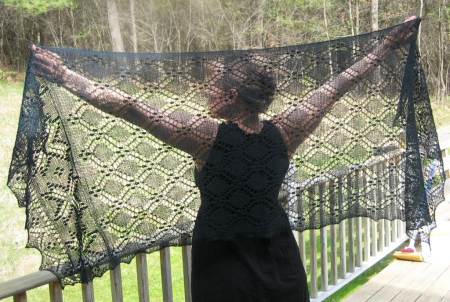
Woman wearing Russian mink fur coat

Due to the extremely Cold Winter climate in Russia, especially in the Siberia region in the North, fur coats and other clothing have become a mainstay of life in Russia. Their association with Russia is strongly ingrained in popular culture - movies and television programs depicting Russia or Russian characters, often feature beautiful Russian woman adorned in fur coats, or wearing fur hats.

This article discusses the history and importance of fur, and the qualities of Mink and Sable fur - used to make the finest quality fur coats and jackets.

(more…)

view more items in our store


Tags: , , , ,
Posted in General | No Comments »

The History of Russian Toys

Written by Vadim on March 3, 2009 – 12:00 am -

Hand-made wooden Matryoshka dollLike cultures all over the globe, Russians have been collecting, playing with, and displaying toys for their entire history. Russian toys are unique, however, in that they have had influences from a wide variety of cultures and religions. Because they are the most abundant natural materials in Russia, wood and clay are the two most common ingredients of traditional Russian toys. Other than this, there are no hard and fast rules or themes.

Prehistoric Russian Toys: Few toys exist from prehistoric Russia, but they all follow a similar pattern to prehistoric toys found throughout the world. Simple musical instruments such as rattles and whistles have been found at archaeological sites as well as figurines of humans and animals that may have been rooted in religion and spirituality.

Slavic era Russian bird toysSlavic Era: Russia’s first existence as a nation and a culture was under the control of the Slavs, which are first recorded in the area before the first millennium AD. The early toys of this time were often in the shape of birds and other animals which had agricultural and/or seasonal significance. Penny whistles were popular as they were part of the worship of the Slavic god Yarilo. Simple wooden rattles and other early musical instruments were popular among adults and children alike.


Byzantine era Russian plain wooden figurines.Byzantine Era: While the rest of the world was immersed in the Dark Ages, Russia was enjoying a rich and flourishing culture. Russians during this era had toys that could be made at home with simple materials and the skills that were common at that time. A popular toy from this era was a plain wooden statue or figurine depicting a figure or scene from popular folk tales. These were highly detailed and usually unpainted. Toys made in this ancient tradition are still being manufactured, most notably by craftsmen in Bogorodskoe.


Czarist Era Dymkovo - small painted clay toys named after the town where they were originally made, date back to the Czarist period of Russia and are also still made in modern timesCzarist Era: Dymkovo, small painted clay toys named after the town where they were originally made, date back to the Czarist period of Russia and are also still made in modern times. They are notable because high quality dymkovo can be made at home by laymen. They typically are bright colored, simple, and feature characters and objects from nineteenth century Russian life.

Nesting shapes became popular during this time, both as figurines and as toys. Ornately decorated eggs, apples, and other shapes were common. Toward the end of the nineteenth century, there was a resurgence of interest in traditional Russian crafts, which led to the creation of a ‘national toy’, the Matryoshka, which was ironically modeled after a Japanese nesting doll of similar design.


Russian communist-era wooden toy depicting two bears on a see-sawCommunist Era: While many handicrafts were discouraged, others flourished. The simple wooden toys of eras past regained popularity and were now made to have moving parts. Bears were common, and were often shown eating at a table and performing other typically human activities.

Modern Era: In an increasingly global economy, Russian children, like children everywhere, are playing with the commercialized toys marketed and sold by global companies. Toys based on Russian television programs are especially popular. However, the fall of the Soviet Union has resulted in a resurgence of folk craft and increased interest in traditional Russian arts and crafts. This, combined with a worldwide demand for Russian toys and memorabilia, is sure to result in a resurgence of distinctively Russian toys. 

References:

http://en.wikipedia.org/wiki/Matryoshka_doll
http://en.wikipedia.org/wiki/East_Slav
http://en.wikipedia.org/wiki/Slav
http://en.wikipedia.org/wiki/Dymkovo_toys
http://www.kolinskyartbrushes.com/dymkovo-figurines/
http://www.artrusse.ca/bogorodskoe_en.htm

view more items in our store


Tags: , , ,
Posted in General | No Comments »

Matryoshka: An International Love Affair

Written by Vadim on February 27, 2009 – 12:00 am -

Matryoshka: An International Love Affair

Partially disassembled Russian Matryoshka doll Perhaps the best known Russian toy, matryoshka, or wooden nesting dolls, are a relative newcomer to the world of Slavic toys. Although nesting toys in the shape of an egg or ball have been popular in Russia for centuries, nesting dolls first came to the country as a souvenir from Japan in the late nineteenth century. Since then, matryoshka have become one of the most beloved symbols of traditional Russian culture.

Nesting dolls depicting Russian nobilityLike the egg shaped toys preceding Matryoshka, nesting dolls are traditionally made with a lathe with the inner most doll created first. They are then painted, usually to resemble women and girls in traditional Eastern European dress. However, not all matryoshka are feminine. Nesting dolls have been made to resemble birds, characters from popular folk tales, and even Communist leaders of the twentieth century.

The most remarkable feature of matryoshka is usually the elaborate painting. Regardless of the theme or type of characters, Russian nesting dolls are painted in vibrant colors, then heavily varnished. The designs are usually reminiscent of traditional agrarian Russian culture.

The name ‘Matryoshka’ has its own colorful history. At the time that nesting dolls became popular in Russia, Matryona was a widespread female name, with Matryoshka the most common nickname. In addition, the name Matryona comes from ‘mater’, the Latin word for mother. Because the dolls had a maternal theme, with several females nested inside each other, this name took hold in Russia and is now internationally recognized.

During the Soviet era, traditional matryoshka dolls became rare enough to be almost an endangered species. The government did not allow the sale or display of handicrafts. Although there were matryoshka factories, the dolls made there had to be manufactured in an efficient, assembly line manner that took the warmth and uniqueness from this traditionally handmade toy and made more traditional, complicated designs impossible. Although some toys were illegally made and exported throughout this time, handmade and hand-painted nesting dolls from Russia were not commonly available until after the fall of the Soviet Union.

Matryoshka dolls have a variety of uses in the modern world. They remain beloved toys for children and the young at heart all around the world. Nesting dolls can also make a quaint yet cultured addition to home decoration. They have been used as promotional items from companies and even as invitations to weddings. Matryoshka bring a distinctively Eastern European flavor wherever they appear.

Matryoshka dolls have become not just a recognizable symbol of old Russia, but a metaphor as well. The word ‘matryoshka’ is often used to describe like items neatly nesting inside each other, such as makeup kits or storage containers. They have made their mark in every field from astroengineering (“The Matryoshka Brain”) to children’s television (“Higglytown Heroes”). This may be due to the enduring nature of a nesting doll. Like these distinctive nesting dolls, we all have multiple layers just waiting to be discovered. Perhaps this is the true reason matryoshka nesting dolls have captured hearts all over the world. Traditionally coloured Matryoshka dolls

References:

http://en.wikipedia.org/wiki/Matryoshka

http://www.madehow.com/Volume-6/Matryoshka-Doll.html

http://www.angelfire.com/art2/petrikovka/matryoshkahistory.html

view more items in our store


Tags: ,
Posted in General | No Comments »

War and Peace: Russian Military Memorabilia

Written by Vadim on February 17, 2009 – 12:00 am -

Soviet Red Army FlagWhy do military toys have such a prominent position in every Russian memorabilia collection? Simply, it is because the military was a huge part of Russian life during the twentieth century. The Soviet military was not just a defense department, but a symbol of the strength and power of communism. Military strength was held up as a communist ideal, which can be seen in the government’s names for the military: “The Red Army” and “Army of Workers and Peasants.” Red was a popular color throughout the Communist regime because it symbolized the blood that was shed in the struggle against capitalism.


An example of a Coat of Arms used within the Soviet MilitaryThe Soviet military became a force outside its own borders when it captured Berlin in World War II, delivering a death blow to the Nazis. Suddenly, the symbols and weapons unique to the Soviet defense became objects of fascination throughout the rest of the world. Almost overnight, the Soviet Union emerged as a formidable and even frightening world power.


From the 1940’s through its collapse, the Soviet military was the largest in the world. By the 1970’s, it was the only country that boasted military strength rivaling that of the United States. This supremacy was due to two key factors: the Soviet Red Army soldiers and the superior weapons and military technology made available by the Soviet war machine.

The Soviet Army was able to maintain its size due to conscription. For many decades, every young man and many young women in the Soviet Union served at least two to three years in the military. In an empire so far-reaching, this was an impressive force. The soldiers were trained in military maneuvers and strategies as well as Soviet political philosophy.

The other strength of the Soviet military came from their weapons and military equipment. While many Americans are most familiar with the Soviet nuclear program, advances were made in almost every class of weapons. This came at a cost. During the 1980’s, 70% of the Soviet Union’s annual budget and 14% of the gross domestic product was spent on the military. However, this investment yielded some of the most impressive weapons in world history, including:


AK-47 (Kalashnikov) rifleThe AK-47/Kalashnikov rifle. Weapons experts estimate that more AK-47 rifles have been produced since its introduction in the late forties than all other assault rifles combined. This is a true assault weapon, with no use except taking human life. Durable, cheap, and easy to use, the AK-47 is all muscle and no mercy.


MiG Fighter Jet

The MiG Fighter Jet. This is the best known of a huge collection of Soviet jets. Perhaps best known for its role in the American movie Top Gun, the MiG-29 is considered on par with top of the line American fighter jets such as the F-16.


Soviet Mil Mi-17 Military HelicopterSoviet Military Helicopters. Although the Soviet military had a late start in helicopter manufacturing, they quickly became second only to the United States in helicopter technology. Russians currently design and supply military and civilian helicopters to nations around the globe.


Soviet Katyusha Missile LauncherSoviet Missiles. Unlike the United States military, the Soviet Union maintained a branch of the military devoted entirely to missiles and rocketry, the Strategic Rocket Forces. This has yielded some of the most advanced rockets in the world, including the famous Katyusha Rocket of WWII and the SS-9 “Satan” that gained infamy during the Cold War for its potential as a weapon of first strike.

The fame and high quality of Soviet weapons, as well as their notable roles in battles that changed the course of world history, have made the Russian models and toys that resemble them a valued collector’s item for vintage toy collectors, war memorabilia collectors, and lovers of Russian culture. Unfortunately, the demand for these pieces of history is far greater than the supply of authentic Russian military toys.

References:

http://en.wikipedia.org/wiki/Soviet_Armed_Forces
http://en.wikipedia.org/wiki/Red_army
http://www.britannica.com/EBchecked/topic/494046/Red-Army
http://en.wikipedia.org/wiki/AK-47
http://en.wikipedia.org/wiki/MiG
http://www.centennialofflight.gov/essay/Rotary/Soviet/HE19.htm
http://en.wikipedia.org/wiki/Katyusha

view more items in our store


Tags: , , , , ,
Posted in General | No Comments »

The Soviet Space Programme: Sputnik to Mir - A Century of Russian Pride

Written by Vadim on February 10, 2009 – 3:25 pm -

Sputnik space probeSome of the most popular Russian toys from the second half of the twentieth century were toys related to the Soviet space program. It’s no wonder that this unlikely topic captured the imagination of several generations of Russian tots. From the launch of Sputnik I in 1957, the space program was a proud symbol of the skill and supremacy of the Soviet Union.

Sputnik opened not just an interest in space and astronomy, but a love of education and the sciences. Although the Soviet Union began as a movement of the working class, it found its renaissance in technology. The passion ignited by Sputnik was strong enough to sustain the country over a decades-long arms race. This enthusiasm was fed by the Cold War against the United States of America, which was romanticized as a competition between the opposing ideologies of communism and capitalism.


Vladimir Putin holding model rocketFor a while, it appeared that communism was winning the battle of the brains. The Soviet Union was not just the first nation to launch a satellite into space, but the first nation to put a man, then a woman, into space through the groundbreaking Vostok program.

Among the most popular Soviet space toys were toy rockets, made to resemble famous Soviet rockets such as the highly successful Proton rockets, which have been in continual use for several decades, and the R-7 rockets.


Soyuz space capsuleAnother giant leap for mankind made by the Soviet Union was the Soyuz program, a manned space program which has put more humans into space than any other in history. In a nation fraught with economic and political troubles, these triumphs caught the imagination and spirit of millions of Russians. A generation of children grew up playing with scale Soyuz space capsules and envisioning themselves as the next pioneer to see the Earth from the outside in.


Buran space shuttleLike the American space shuttle it imitates, the Soviet Buran space shuttle was a recognizable symbol of the country’s advances into the unknown frontier of space. As the Cold War came to a close and Soviet-American relationships thawed, the space program continued to raise national pride and stimulate interest in the sciences.


Space Station MirThe third generation of Soviet space craft culminated in the space station Mir, which was visited by astronauts from many different nations. Mir stayed in orbit for just days short of a decade, and outlasted the transition from a Soviet space program to a purely Russian one.


Space-themed toyThe Soviet space program has been an enduring point of Russian pride, and nowhere is this as evident as in Russian toys from this era. Models can be found of almost every declassified Soviet spacecraft. The toys range from the fanciful to perfectly scaled replicas. Although the Russian space program continues, it will never have the place in society it held during the Cold War. For just a few decades in time, travel in space was a symbol of hope and triumph in a nation that yearned for both. The era may be past, but its spirit lives on in the many toys and models that enthralled millions of Russian children.

References:

http://en.wikipedia.org/wiki/Soviet_space_program

http://en.wikipedia.org/wiki/Sputnik

http://en.wikipedia.org/wiki/Vostok

http://en.wikipedia.org/wiki/Proton_(rocket)

http://en.wikipedia.org/wiki/Soyuz_spacecraft

http://en.wikipedia.org/wiki/Buran_(spacecraft)

http://en.wikipedia.org/wiki/Mir

view more items in our store


Tags: , , , ,
Posted in General | No Comments »

About Khokhloma (Russian Lacquered Timber)

Written by Vadim on January 2, 2009 – 2:15 pm -

Ivan Bakanov. Khokhloma artists at work. Palekh miniature, 1929.

Mil Helicopter painted in Khokhloma as seen on 2007 MAKS Airshow

Khokhloma tableware on Soviet postage stamp

Khokhloma (Хохлома, Хохломская роспись in Russian, or Khokhlomskaya rospis’) is the name of a Russian wood painting handicraft.

It first appeared in the second half of the 17th century in today’s Koverninsky District of the Nizhny Novgorod Oblast. The handcraft was named after a trade settlement Khokhloma in the same oblast, where craftsmen had been known for making and selling their handmade goods between the 18th and early 20th centuries.

An original technique of painting wood in a goldish color without applicating real gold is typical for the Khokhloma. Articles carved out of wood (tableware, mostly) were usually primed with clay mortar, raw linseed oil and tin powder (nowadays, aluminum). A floral pattern was then painted on top of this coating with a brush. After that, the articles were coated with linseed oil (nowadays, synthetic oil) and hardened in a kiln at high temperatures. A combination of red, black and gold are typical colors for the Khokhloma. There are two principal wood painting techniques used in the Khokhloma, such as the so-called “superficial technique” (red and black colors over the goldish one) and the “background technique” (a goldish silhouette-like design over the colored background).

The Khokhloma handcraft seemed to be fading away in the early 20th century, but it revitalized during the Soviet times. The Khokhloma craftsmen united into artels in the 1920s - early 1930s. In the 1960s, the Soviets built a factory called the Khokhloma Painter near the Khokhloma village and an industrial association called the Khokhloma Painting in a town of Semyonov. These two factories have become the Khokhloma centers of Russia and produce tableware, utensils (mostly spoons), furniture, souvenirs etc.

External links

© This material from Wikipedia is licensed under the GFDL.

view more items in our store


Tags: , ,
Posted in General | No Comments »

About Russian Accordions (Bayans)

Written by Vadim on December 1, 2008 – 12:38 am -

Bayan
Bayan
Other names HS#:421.221-12
Classification Free-reed aerophone
Playing range

Right-hand manual: The Russian bayan and chromatic button accordions have a much greater right-hand range in scientific pitch notation than an accordion with a piano keyboard: five octaves plus a minor third (written range = E2-G7, actual range = E1-C#8). [1]

Left-hand manual

Musicians
More articles

The bayan (Russian: баян) is a type of chromatic button accordion developed in Russia in the early 20th century and named after the bard, Boyan. It differs from western chromatic button accordions in some details of construction:

  • Reeds are broader and rectangular (rather than trapezoidal).
  • Reeds are often attached in large groups to a common plate (rather than in pairs); the plates are screwed to the reed block (rather than attached with wax).
  • The melody-side keyboard is attached near the middle of the body (rather than at the rear).
  • Reeds are generally not tuned with tremolo.
  • Register switches may be operated with the chin on some larger models.
  • The diminished seventh chord row is shifted, so that the diminished seventh G chord is where one would expect the diminished seventh C chord in the Stradella bass system.
  • Converter switches to go from standard pre-set chords to free bass (individual bass notes) are common on the larger instruments.
  • Newer instruments may feature a register, where every tone played actually produces a perfect fifth.

The differences in internal construction give the bayan a different tone color from western instruments, especially the bass has a much fuller sound. Because of their range and purity of tone, bayans are often the instrument of choice for accordion virtuosi who perform classical and contemporary classical music.

References

  1. ^ Ricardo Llanos and Inaki Alberdi, “Accodion for Composers” (Spanish publication: 2002), 2-5).

External links

Sources

  • Cherkasky, L. - Ukrainski narodni muzychni instrumenty // Tekhnika, Kyiv, Ukraine, 2003 - 262 pages. ISBN 966-575-111-5

© This material from Wikipedia is licensed under the GFDL.

view more items in our store


Tags: , ,
Posted in General | No Comments »

About Ushankas (Russian Fur Hats)

Written by Vadim on November 26, 2008 – 10:30 am -

An ushanka (уша́нка) Russian pronunciation: [uˈʂankə] is a Russian fur cap with ear flaps that can be tied up to the crown of the cap, or tied at the chin to protect the ears, jaw and lower chin from the cold.

The word Ushanka derives from from ushi (у́ши), “ears” in Russian.

Contents

Historical use

German hunter with an early form of the Ushanka, painting by Joachim von Sandrart, 1643.

Finnish soldiers wearing turkislakki (ushankas) in the Winter War

Hats with flexible earflaps made out of fur are found in Russia as well as in Germany and Scandinavia.

During Russian Civil War, when Aleksandr Kolchak ruled in Siberia, he introduced a winter uniform hat, commonly referred to as kolchakovka, which was basically an ushanka with an extra eye-flap.

The categorization as “Russian Cap” is a result of World War II. During the Winter War with Finland 1939 thousands of Russians died of cold due to organizational failures and inadequate equipment. Reforms were undertaken and the Red Army introduced new winter uniform, which included ushanka to replace budyonovkas. German soldiers started to use this and other gear unofficially, [1] though copies were introduced rather late in the war.

Basic materials

Ushankas are often made from cheap sheepskin (tsigeyka, ru:Цигейка), rabbit or muskrat fur, though artificial fur hats are also manufactured. Artificial fur has sometimes been referred to as “fish fur[2] since the material has no relation to any real fur. The simplest “fish fur” of ushankas was made of wool pile with cloth substrate and cloth top, with the exception of flaps, in which pile was exposed.

Stereotype

Gerald Ford wearing an ushanka and Leonid Brezhnev wearing a papakha, 1974 in Vladivostok

Though ushankas are a distinctly Russian hat (indeed, the stereotypical Russian is seen to wear one) the wearing of fur caps of similar design was relatively common throughout China, North Korea, Eastern Europe and the former Soviet Union.

The Ushanka became a symbol and media icon of Soviet Russia. Photographs of US President Gerald Ford wearing the cap during a 1974 visit to Russia were seen as a possible sign of Détente. In 1991, with the fall of the Soviet Union came the first wave of commercially imported Russian winter hats into the United States. Due to their warmth, the hats are beginning to receive some user adoption in the States.

See also

Sources

  1. ^ Mathias Färber: Zweiter Weltkrieg, Unipart-Verlag, Stuttgart 1990, ISBN 3-8122-3001-1, S. 556
  2. ^ Zaloga, Steven J. Red Army of the Great Patriotic War 1941-5. Osprey Publishing, 1989. ISBN 0850459397. p. 43.
© This material from Wikipedia is licensed under the GFDL.

Tags: , ,
Posted in General | No Comments »

Russian Tumbler Toys Nevalyashka and Vanka Vstanka

Written by Vadim on November 22, 2008 – 12:00 pm -

In Russia and many former Soviet countries, almost every child played with one of these toys when they were little - an upright doll with a round heavy base that stands on the floor. When you try and push the doll over, it springs back upright.

In Russian, they go by two names - ‘Nevalyashka’, meaning ‘One who never lies down’ and ‘Vanka Vstanka’ - a rhyming, alliterative phrase meaning ‘Ivan get up’. Vanka Vstanka is also the name of a contemporary Russian energy drink, similar to Red Bull.

In English, they are referred to as ’Tilting Dolls’, ‘Bell Dolls’, ‘Tumbler Toys’ and ‘Roly Poly Toys’. 

Nevalyashkas come in two popular varieties - one with an internal bell that rings when the doll shakes [as shown above] and other variety which is made of timber that can be painted [shown below].


It has been suggested by Elena Marus of the site WOW Russia, that the Nevalyashka/Vanka Vstanka is a dual-purpose toy that is intended to develop an infant’s hearing and sense of touch. She also states that it is purported to “develop creativity, imagination, hearing and movement co-ordination in children, but nobody knows exactly how it works”.

Here is a video showing the Nevalyashka doll in action:


Tags: , , , ,
Posted in General | No Comments »

The Russian Guitar (Balalaika)

Written by Vadim on November 21, 2008 – 4:56 pm -

The Balalaika or Balalayka is a truly authentic Russian musical instrument and a key part of  traditional Russian music. It is often heard in Russian Restaurants and at cultural events.

It is instantly recognised by its distinctive three-cornered body. Most Balalaikas have three strings, but there are also six-stringed Balalaikas. It is often referred to as a ’Russian Guitar’, although technically it shares more similarities with the Mandolin or Banjo.

The three-stringed Balalaika is traditionally tuned to the notes E-E-A (the two lower strings have the same pitch).

The Balalaika was popular as a village instrument for centuries, particularly with the Skomorokhs - a group of people who could be best described as free-lance musical comedy performers. Their tunes often ridiculed the Tsar, the Russian Orthodox Church, and Russian society in general. For this reason, bans were imposed from time to time on the playing of Balalaika music. The first written reference to a Balalaika was on an arrest slip for two serfs in 1688, accused of being drunk and disorderly outside the Kremlin in Moscow, playing the Balalaika.

No-one is completely sure how the Balalaika got its distinctive triangular shape, but there are multiple theories to explain it: 

One popular notion is that the three sides and strings of the Balalaika are supposed to represent the Holy Trinity. This explanation is not considered credible, due to the fact that musical instruments are not allowed in Russian Orthodox liturgy, and due to the church’s contempt towards the Skomorokhs.

A likelier reason is given by the writer and historian Nikolai Gogol in his unfinished novel Dead Souls (1842). He states that a Balalaika was made by peasants out of a pumpkin. If you quarter a pumpkin, you are left with a Balalaika shape.

A third theory is that just before the rule of Tsar Peter The Great (1682-1725), there had been a ban on all musical instruments. When Peter re-allowed them, only the boat builders knew how to work with wood. The Balalaika looks a little like the front of a boat, if held horizontally.

The final theory comes from a Russian tale. During the Mongol invasion of Rus (a historic slavic region that includes parts of Ukraine, Russia, Belarus, Poland and Slovakia), a Russian man from Nizhny Novgorod was captured by the Mongols, but the Mongol Khan [ruler] liked him because of his musical talent, so he released him and gave him a guitar. When the Russian man returned home, he removed three strings from the guitar, so that he would be able to repair it if he broke one of the strings, so he was left with a 3-string guitar.

Here is a video of the skilled Balalaika duo Alex Siniavski and Mikhail Smirnov, who are seen here bringing out the best sound from this instrument:


References (In Russian):

view more items in our store


Tags: , ,
Posted in General | No Comments »